

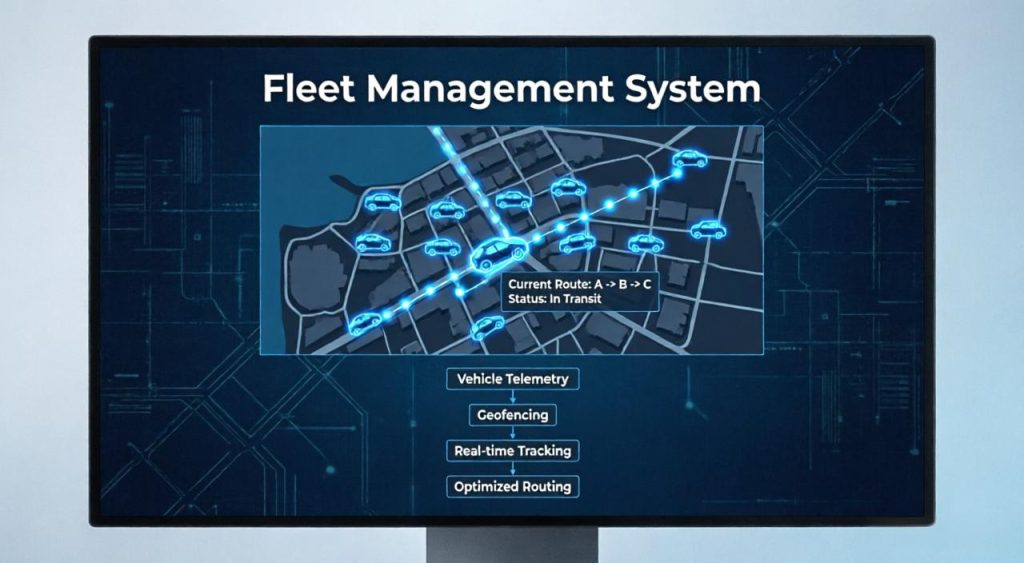
At its core, a Fleet Management System (FMS) is a comprehensive software and hardware solution that allows businesses to monitor, track, and manage their commercial vehicles in real-time.
I am Arthur Ma, an IT practitioner with years of experience in Internet plus vehicle management systems. I have been involved in the development of freight fleet management systems, passenger fleet management systems, and mining fleet management systems. I would like to share my experience in serving customers with you
However, if you are looking to purchase one, you should think of it as more than just a “GPS tracker.” It is a centralized command center that gives you complete visibility and control over your entire operation.
Where are my assets right now?
- Are my drivers safe and compliant?
- How can I reduce operational costs?
Here is a breakdown of why a modern FMS is essential for your business and how it directly impacts your bottom line.
1. Drastic Cost Reduction
The most immediate impact of an FMS is on your budget. It targets the biggest expenses in fleet operations: fuel, maintenance, and labor.
- Fuel Efficiency: Fuel is often the largest expense. An FMS monitors idling time, speeding, and route deviations. By analyzing this data, you can coach drivers to adopt fuel-efficient habits, potentially saving 10–15% on fuel costs.
- Preventative Maintenance: Instead of waiting for a breakdown, the system tracks engine diagnostics (via OBD-II or CAN bus data) and alerts you when a vehicle needs service. This prevents costly roadside repairs and extends the lifespan of your vehicles.
- Reduced Insurance Premiums: Many insurance providers offer discounts for fleets equipped with tracking and safety monitoring systems.
️ 2. Enhanced Security & Theft Prevention
Vehicle and cargo theft is a major concern. An FMS acts as a powerful deterrent and recovery tool.
- Geofencing: You can set up virtual perimeters around specific areas. If a vehicle enters or leaves a designated zone without authorization, you receive an instant alert.
- Real-Time Recovery: In the event of theft, real-time GPS tracking allows you (and law enforcement) to pinpoint the exact location of the asset for recovery.
Advanced Anti-Siphoning (Fuel Theft) Protection
One of the most sophisticated features of a modern FMS is the ability to detect and prevent fuel theft, which can silently drain your profits.
- High-Precision Fuel Sensors: The system integrates with capacitive fuel level sensors that detect even minor drops in fuel volume.
- Instant Alerts: If fuel is siphoned while the ignition is off, or if there is an unexplained rapid drop in fuel levels, the system triggers an immediate “Fuel Theft Alert” to the manager.
- Detailed Reporting: You get a graphical report showing exactly when and where the fuel loss occurred, providing evidence for investigations and acting as a strong deterrent for drivers.
3. Operational Efficiency & Productivity
An FMS eliminates guesswork from your daily operations.
- Route Optimization: The system analyzes traffic patterns and suggests the most efficient routes, ensuring drivers spend less time on the road and more time delivering value.
- Automated Dispatching: Dispatchers can see the location of every vehicle on a map and assign the nearest available driver to a new job, reducing response times.
- Digital Documentation: Replace paper logs with digital workflows. Proof of delivery, driver logs, and inspection reports can all be captured digitally, saving hours of administrative work.
4. Safety & Compliance
Safety is not just about protecting drivers; it is about protecting your business from liability.
- Driver Behavior Monitoring: The system tracks harsh braking, rapid acceleration, and cornering. You can generate “Driver Scorecards” to gamify safe driving and reduce accident risks.
- Regulatory Compliance: For fleets subject to regulations (like ELD mandates in the US or tachograph rules in Europe), an FMS automates Hours of Service (HOS) tracking, ensuring you stay compliant and avoid heavy fines.
How to Choose the Right Fleet Management System?
If you are in the market to buy, do not just look for the cheapest option. Look for a partner that offers:
- Scalability: Can the system grow from 10 vehicles to 100?
- Ease of Use: Is the dashboard intuitive? Can your dispatchers learn it quickly?
- Hardware Compatibility: Does it work with your specific vehicle makes and models?
- Support: Is there 24/7 customer support available when you need it?
Summary:
A Fleet Management System is an investment that pays for itself. By providing real-time visibility, preventing fuel theft, and optimizing routes, it transforms your fleet from a cost center into a streamlined, efficient asset.